| A comprehensive resource library of KYR information for immigration enforcement encounters at home, work, school, healthcare facilities, and public spaces. Updated for 2026.Last week, ICE agent Jonathan Ross shot and killed Renee Nicole Good in Minneapolis, just blocks from where George Floyd was killed by a police officer five years ago. Good was a 37-year-old mother of three who, reports suggest, had been serving as a legal observer. The administration recklessly and baselessly labeled her death an act of “domestic terrorism.” Many Americans who watched video footage from Ross himself conclude that the footage tells a different story: Good speaking politely before attempting to leave. A new poll finds that the majority of Americans—53%—now believe that Ross’s shooting was not justified. Good’s killing is not an isolated incident. According to The Guardian, immigration agents have shot at people 16 times since January 2025. Over 170 U.S. citizens have been wrongfully detained. Lower courts have found that federal tactics likely violated the Fourth Amendment—including a Chicago judge who ruled that agents’ use of chemical munitions against peaceful crowds “shocked the conscience”—though the Supreme Court has stayed some of these rulings on appeal. At least five senior prosecutors in the Justice Department’s Civil Rights Division resigned this week, reportedly in protest after leadership said they could not investigate the Minneapolis shooting but instead were being forced to investigate the victim, Good herself. Minnesota, Minneapolis, and Saint Paul have filed a federal lawsuit alleging that Operation Metro Surge amounts to “a federal invasion” involving racial profiling, unlawful force, and retaliation against legal observers. Illinois and Chicago have filed their own lawsuit over similar allegations. In this environment, “Know Your Rights” resources have taken on renewed urgency. ICE and Border Patrol are now operating far beyond the border, conducting raids in apartment buildings in Chicago, stopping drivers in rural North Carolina, and deploying thousands of agents to cities like Minneapolis that have never seen enforcement at this scale. Legal organizations across the country have worked tirelessly to update their materials for a post-protected-areas landscape, while state attorneys general in Minnesota, New York, Illinois, and California have issued official guidance to fill the gap left by a federal government that treats established law as optional rather than an obligation. This administration’s dismissiveness toward the law should make us realistic about what Know Your Rights information can and can’t do. At the start of the administration, I said: we can’t “know your rights” our way out of this one.  Austin Kocher, PhD @austinkocher.com Austin Kocher, PhD @austinkocher.com I don’t think we’re going to “know your rights” our way out of this one. Thu, 17 Apr 2025 03:37:15 GMT That skepticism has proven warranted. Knowing your rights cannot stop an agency that ignores the distinction between a judicial warrant and an administrative one. A Red Card cannot prevent an agent from pointing a gun at a bystander. The Constitution is only as protective as the institutions willing to enforce them. And when the DOJ’s Civil Rights Division is blocked from truly investigating a fatal shooting captured on the shooter’s own video, we should view the law as a necessary but insufficient resource. You should know your rights, but be aware that rights can go wrong in an instant when law enforcement don’t respect them. Knowing your rights before you need to exercise them can give you the confidence to do the right thing in the right moment. This administration has a terrible track record in court, often dropping lawsuits designed to do little more than intimate. Know Your Rights information can also create a record. When someone asserts their rights on video, when they refuse consent and document that refusal, and when they note badge numbers and contact lawyers, these actions generate evidence. This evidence can feed into lawsuits like the ones now pending in Minnesota and Illinois and help document patterns of abuse that journalists use to hold agents accountable. This evidence may even force accountability when that time comes—even if the law cannot prevent harm in the moment. Nearly a year ago, I published a survey of Know Your Rights resources that identified common themes across dozens of guides and materials. But the resources I compiled a year ago were largely created before Trump’s second term. Much has changed since then: the rescission of the protected areas policy, the expansion of enforcement into schools and hospitals, the militarization of operations in cities like Minneapolis and Chicago. The overarching principles that I shared in that article remain as relevant as ever, but the actual Know Your Rights resources themselves require constant updating. This post, therefore, provides an updated compilation of Know Your Rights resources produced since January 2025, drawing from the most authoritative legal organizations, state attorneys general, civil rights groups, and recent news coverage. The resources below span a wide range of contexts—from state-specific guides produced by attorneys general in Minnesota and New York, to specialized materials for homeless shelter providers, healthcare workers, employers, and Native American communities. They include guidance for encounters at home, at work, on the street, and at formerly “protected” locations like schools and hospitals. Many are available in dozens of languages. I’ve organized these by the spaces where we need to exercise our rights (home, work, school, etc.), with descriptions of each resource, language availability, publication dates where available, and the name of the organization or source of the materials. This is not legal advice and I am not an attorney. If you or someone you know faces an immigration enforcement encounter, consult with a lawyer. To find an organization in your area that might be able to help, visit the Immigration Advocates Network’s searchable online database. I work on the NPR model here: help keep this resource free to the public with a paid subscription in 2026. What's in This GuideThis guide organizes Know Your Rights resources by situation so you can quickly find what you need, whether you're preparing for a potential encounter, helping someone who's been detained, or training others in your community. Essential Resources – Start here. The most comprehensive guides that cover multiple scenarios. At Home – What to do if ICE comes to your door. At Work – Rights for workers and guidance for employers during workplace enforcement. On the Street / In Public – Encounters with ICE or Border Patrol in public spaces, checkpoints, and roving patrols. At School – Resources for students, parents, educators, and school administrators. At Healthcare Facilities – Guidance for patients and healthcare providers. At Homeless Shelters and Social Services – Resources for service providers and clients. If Detained – What to do if you or a loved one is arrested or in custody. For Green Card Holders / Lawful Permanent Residents – Specific risks and rights for LPRs. For Specific Communities – Resources tailored to AAPI, Native American, and indigenous language communities. For Community Organizations and Advocates – Training materials, flyers, and tools for conducting Know Your Rights presentations. Observing and Documenting Enforcement – How to safely film and document ICE activity. Podcasts on Immigration Enforcement and Rights – Audio content for deeper learning. Acronym Glossary – Key to organization abbreviations used throughout this guide. What did I miss? + Was this helpful? – An invitation for you to send additional resources and provide feedback on this resource.
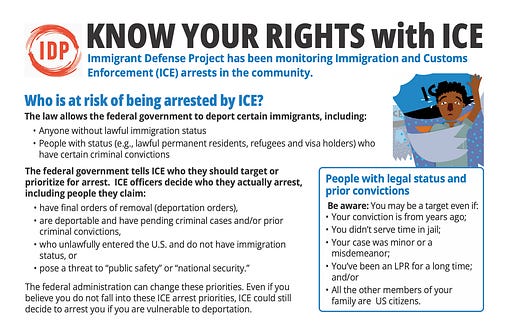
1. Essential ResourcesThese comprehensive guides cover multiple scenarios and are the best starting points for understanding your rights during immigration enforcement encounters. Immigrants’ Rights: Know Your Rights – Comprehensive guide covering encounters at home, work, and public spaces, with specific sections for DACA recipients. Available in English, Spanish, and with downloadable graphics. Updated September 3, 2025. Source: ACLU Red Cards (Tarjetas Rojas) – Business card-sized cards asserting constitutional rights, designed to be shown to immigration agents. Over 10 million cards distributed. Available in 56 languages including English, Spanish, Arabic, Chinese, Farsi, Hmong, Somali, Ukrainian, and many others. Nonprofits can request free printed cards. Updated 2025. Source: ILRC Know Your Rights Community Resources Hub – Central hub for ILRC's Know Your Rights materials including Red Cards, flyers, solidarity signs, training webinars, and advocate toolkits. Resources available for download in multiple languages. Updated 2025. Source: ILRC Know Your Rights with ICE – Detailed guide covering arrest trends, encounter scenarios, and constitutional rights. Includes printable cards, multilingual materials, scenario-based guides, and videos. Updated February 2025. Source: IDP
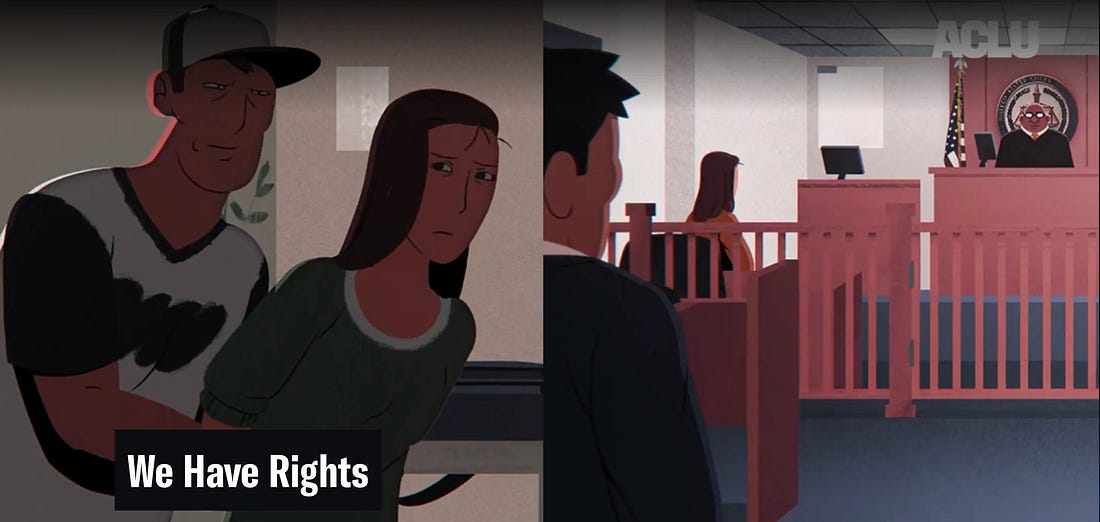
Know Your Rights Card – Wallet-sized cards summarizing constitutional rights during immigration encounters. Available in English, Spanish, Arabic, Chinese, Haitian Creole, Korean, Tagalog, Vietnamese, and other languages. Updated April 9, 2025. Source: NILC Know Your Rights Client Flyers – Downloadable flyers covering ICE encounters at homes, workplaces, and public spaces. Customizable Word documents available for attorneys. Available in English, Spanish, Chinese, Portuguese, Arabic, Haitian Creole, Punjabi, and other languages. Updated February 28, 2025. Source: AILA Know Your Rights Under the U.S. Constitution—No Matter Who Is President – Overview of constitutional protections that apply regardless of immigration status, covering rights at home, on the street, and elsewhere. Published January, 2024 (but evergreen). Source: NILC Know Your Rights with ICE Booklet – Comprehensive city-produced guide for New York City residents. Available in English and Spanish. Published February 2025. Source: NYC Mayor’s Office of Immigrant Affairs [Podcast] Know Your Immigration Rights – Episode featuring ACLU National Director of Immigrant Community Strategies Maribel Hernández Rivera and Deputy Director of ACLU Immigrants’ Rights Project Lee Gelernt discussing what’s changed under the current administration and how to protect yourself and neighbors. Hosted by W. Kamau Bell. 1:02:47. Published February 28, 2025. Source: ACLU “At Liberty” Podcast [Video Series] We Have Rights – Professionally-produced video series on constitutional rights during immigration encounters. Narrated by Jesse Williams (English), Diane Guerrero (Spanish), Kumail Nanjiani (Urdu), and others. Available in 8 languages: English, Spanish, French, Urdu, Arabic, Haitian Creole, Russian, and Mandarin. Updated 2025. Source: ACLU
2. At HomeKnow Your Rights: Immigration – Guide framing immigration rights within a civil rights framework, covering protections for both citizens and immigrants and discrimination safeguards. Updated 2025. Source: NAACP. Also listed in: On the Street / In Public [Video Series] Know Your Rights Video Series for Interacting with Immigration Agents – Video series available in 8 languages including Arabic, Haitian Creole, and Russian. Updated 2025. Source: ACLU-ME [Video] We Have Rights: What to Do When Interacting with ICE – State-specific video guidance. Updated 2025. Source: ACLU-MT [Video Series] Multilingual Know Your Rights Videos – Video series serving Maine’s immigrant communities. Available in English, French, Kinyarwanda, Swahili, Somali, and Spanish. Published February 7, 2025. Source: Amjambo Africa [Video] Know Your Rights: How to Protect Yourself in Encounters with ICE – Comprehensive video guidance on rights during ICE encounters and emergency preparedness. Published February 5, 2025. Source: NYLAG
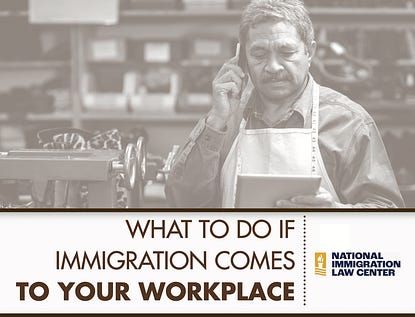
3. At WorkDealing with ICE in the Workplace – Official state guidance distinguishing public versus private workplace areas and explaining warrant requirements. Updated 2025. Source: NY AG Workplace Raids: Workers’ Rights – Fact sheet covering worker rights during ICE workplace operations in California, including protections under state law. Updated 2025. Source: Legal Aid at Work [Webinar Series] Know Your Rights with Law Enforcement and Immigration Officials – Ongoing bilingual webinar series on constitutional rights at home, workplace, and formerly sensitive locations. English/Spanish with interpretation. Free, no registration required for privacy protection. February 6 – May 22, 2025. Source: ACLU-TX
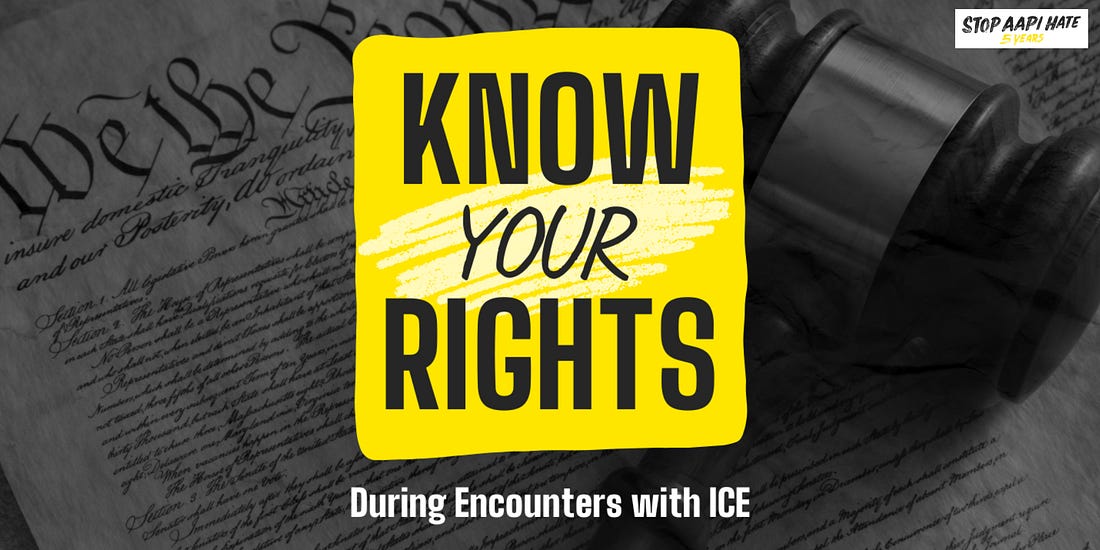
4. On the Street / In PublicKnow Your Rights: 100 Mile Border Zone – Explains Fourth Amendment protections at Border Patrol checkpoints and during roving patrols within 100 miles of any U.S. border. Updated September 5, 2025. Source: ACLU Interior Border Checkpoints – Specific guidance on checkpoint encounters and the distinction between checkpoints and roving patrols. Updated 2025. Source: ACLU-NM Know Your Rights with Law Enforcement and Immigration Officials – Features downloadable posters by Texas artists. Available in English and Spanish. Updated December 12, 2025. Source: ACLU-TX ICE and Border Patrol Abuses – Overview of enforcement abuse patterns including racial profiling, warrantless home entries, excessive force, interior checkpoints, and surveillance. Updated 2025. Source: ACLU Know Your Rights: What to Do If ICE Stops You or Comes to Your Home – Guide specifically addressing the AAPI community. Published March 21, 2025. Source: Stop AAPI Hate. Also listed in: At Home Know Your Rights: Immigration – Guide framing immigration rights within a civil rights framework, covering protections for both citizens and immigrants and discrimination safeguards. Updated 2025. Source: NAACP. Also listed in: At Home [Article] What to do if ICE stops you: An attorney answers some questions – Q&A format with an immigration attorney covering the right to remain silent, when to show ID, and how to respond to agents during the Minneapolis enforcement surge. Published January 12-13, 2026. Source: MPR News [Article] What ICE agents can and can’t do, and what legal rights the public has during encounters – Explainer covering constitutional rights during the largest ICE operation in Minneapolis history, including coverage of community “constitutional observer” trainings. Published January 10, 2026. Source: Minnesota Star Tribune [Article] 2,000 ICE Agents Descended on Minneapolis. What Legal Rights Do People Have During Immigration Raids? – In-depth explainer on Fourth and Fifth Amendment rights, noting that over 170 U.S. citizens have been wrongfully detained since January 2025. Published January 2026. Source: GovFacts [Article] Border Patrol expected in Charlotte – know your rights – Guidance for Charlotte-area residents as Border Patrol expands to interior regions. Published 2025. Source: Charlotte Observer [Article] ICE has arrived in the Triangle – guide to resources – Local resource compilation for Chapel Hill, Durham, and Raleigh area residents. Published 2025. Source: Chapelboro
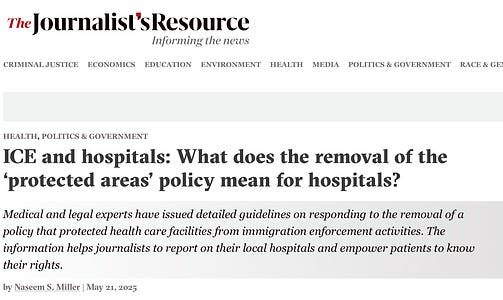
5. At SchoolProtecting Children in Schools Against Immigration Enforcement: What Schools and Parents Can Do – Toolkit for schools and families covering preparedness plans, warrant identification training, FERPA protections, and family preparedness planning in response to the rescission of sensitive locations policy. Published July 28, 2025. Source: ILRC What You Need to Know About the Rights of Immigrants: For Schools – One-page guide covering students’ right to public education under Plyler v. Doe, FERPA protections, and steps for schools to protect immigrant students. Available in English and Spanish. Published February 2025. Source: NILC Navigating ICE Presence in School and Healthcare Facilities – Legal guidance for social workers covering FERPA and HIPAA protections, the distinction between judicial and administrative warrants, and state-by-state policy variations. Published February 2025. Source: NASW. Also listed in: At Healthcare Facilities Frequently Asked Questions for School Officials: What to Do if ICE Shows Up at Your School – FAQ guide for superintendents covering ICE access to schools, student information requests, warrant verification, and ways to support immigrant families. Updated 2025. Source: UnidosUS Immigration Enforcement Actions at Maryland Schools Guidance – Official state guidance on responding to ICE, protecting student information under FERPA, and supporting immigrant students. Published January 2025. Source: MSDE Guidance on ICE Enforcement in Sensitive Locations – Detailed guidance for schools, hospitals, churches, and other organizations on facility access, warrant requirements, and staff rights. Published May 2025. Source: MN AG. Also listed in: At Healthcare Facilities [Webinar] Immigration Know Your Rights and Advocate Training – Training on how to conduct KYR presentations, expedited removal information, and family protection planning. Free with downloadable toolkit. Available in English and Spanish. Published August 2025. Source: ILRC. Also listed in: For Community Organizations and Advocates [Article] New California immigration laws 2026 cover rights, student protections – Coverage of California laws effective 2026 barring federal agents from non-public areas of schools, hospitals, and daycare centers without judicial warrants. Published January 2026. Source: FOX 11 Los Angeles. Also listed in: At Healthcare Facilities
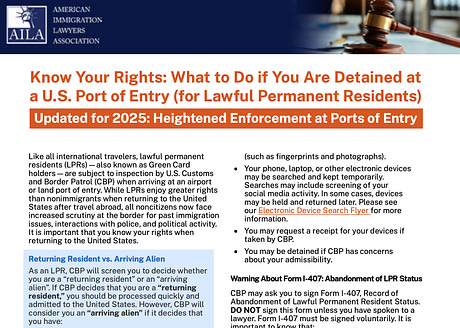
6. At Healthcare Facilities 7. At Homeless Shelters and Social Services 8. If Detained 9. For Green Card Holders / Lawful Permanent Residents 10. For Specific CommunitiesKnow Your Rights: What to Do If ICE Stops You or Comes to Your Home – Guide specifically addressing the AAPI community. Published March 21, 2025. Source: Stop AAPI Hate. Also listed in: At Home; On the Street / In Public Resources for Individuals and Nonprofits Approached by ICE – Specific guidance for Native Americans and tribal organizations, including information on tribal ID acceptance and downloadable flyers. Contact: 303-447-8760. Published January 9, 2026. Source: NARF [Video Series] Know Your Rights in Indigenous Languages – Know Your Rights videos in 8 Mayan and Central American indigenous languages: Achi, K’iche’, Mam, Kaqchikel, Ixil, Maya Yucateco, Garifuna, and Miskito. Published 2025. Source: CIELO
11. For Community Organizations and AdvocatesKnow Your Rights Training Webinars – Recorded training sessions for community organizations. Available in English and Spanish. Published August 2025. Source: ILRC Know Your Rights When Confronted by ICE (Flyer) – One-page flyer summarizing rights during ICE encounters, suitable for posting or distribution. Updated 2025. Source: ILRC Solidarity Signs – Printable signs for businesses, clinics, and organizations to display in windows, available in English and Spanish. Published June 2, 2025. Source: ILRC Immigration Raids Resources – Comprehensive page with train-the-trainer materials for community organizations conducting Know Your Rights presentations. Updated 2025. Source: IDP Fact Sheet: Trump’s Expansion of Enforcement in Communities and How “Sensitive Locations” Can Prepare – Analysis of policy changes and preparation guidance for formerly protected locations. Published February 2025. Source: NYIC [Webinar] Immigration Know Your Rights and Advocate Training – Training on how to conduct KYR presentations, expedited removal information, and family protection planning. Free with downloadable toolkit. Available in English and Spanish. Published August 2025. Source: ILRC. Also listed in: At School [Webinar] Know Your Rights - During and After ICE Encounters – Legal CLE covering rights in public, home, and work encounters; employer rights during raids; post-detention steps. Self-paced CLE credit available. 1 hour. Published June 26, 2025. Source: LACBA
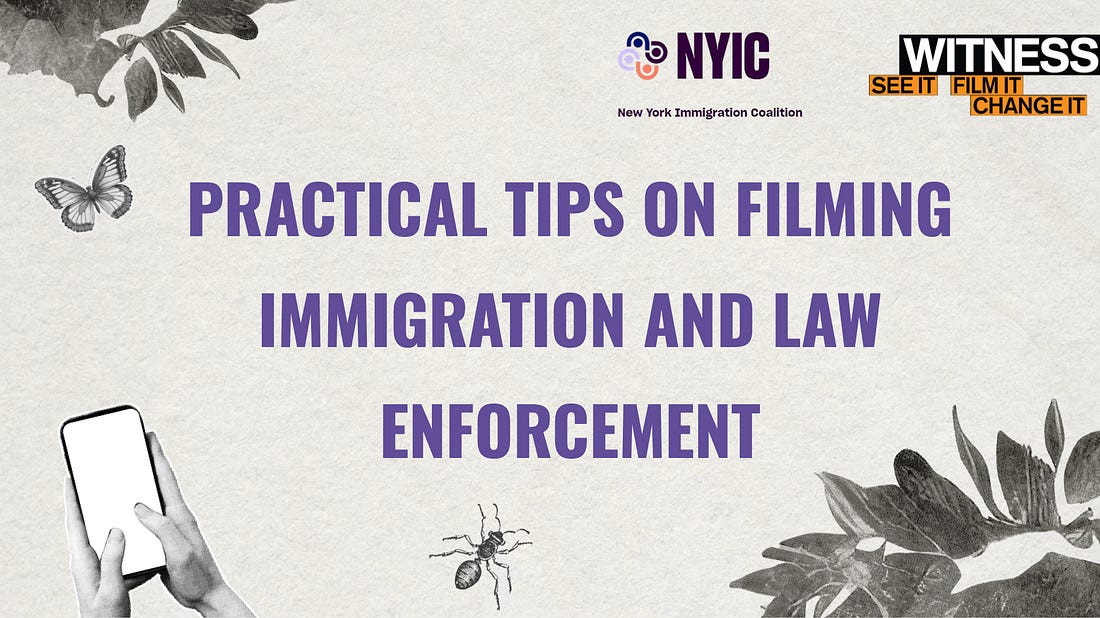
12. Observing and Documenting EnforcementPractical Tips on Filming Immigration and Law Enforcement – Video-as-evidence guide specifically about filming ICE enforcement operations, covering best practices for capturing useful footage, protecting identities, and preserving chain of custody. Updated 2025. Source: WITNESS with New York Immigration Coalition
[Article] Watching Out While Watching ICE – Guidance on best practices for safely observing and filming ICE enforcement activities, featuring advice from the Electronic Frontier Foundation and NC Siembra. Published January 13, 2026. Source: Truthdig by Anna Lekas Miller.
13. Podcasts on Immigration Enforcement and Rights[Podcast] Know Your Immigration Rights – Episode featuring Maribel Hernández Rivera and Lee Gelernt discussing what’s changed under the current administration. Hosted by W. Kamau Bell. 1:02:47. Published February 28, 2025. Source: ACLU “At Liberty” Podcast [Podcast] Where Everybody Knows Your Rights – Episode featuring volunteers from Minnesota, Colorado, and Tennessee discussing community advocacy strategies. Published November 2025. Source: ACLU “At Liberty” Podcast [Podcast] Deployments At Our Doorstep – Episode covering community responses to federal agents and military deployments in cities. Published October 2025. Source: ACLU “At Liberty” Podcast [Podcast] Taken: The Agents Raiding Communities and the People Trying to Stop Them – Coverage of immigration raids, Border Patrol tactics, and community protection efforts. Published October 31, 2025. Source: Latino USA [Podcast] Levantados: Las redadas contra migrantes, el trauma y la comunidad que los defiende – Spanish-language coverage of raids from Los Angeles to Chicago. Published October 31, 2025. Source: Latino USA [Podcast] Silence Won’t Protect Us. Community Will – Episode featuring Cristina Jiménez, co-founder of United We Dream, on community protection strategies. Published September 12, 2025. Source: Latino USA
[Podcast] 48 Hours at El Refugio – Inside look at hospitality house for families of detainees at Stewart Detention Center. Published December 5, 2025. Source: Latino USA [Podcast] ICE Invades South Carolina (Parts 1 & 2) – Episodes covering community meetings with sheriffs about ICE collaboration, the Puerto Nuevo restaurant arrests, and 287(g) agreement opposition. Also available on Spotify. Published October 21, 2025. Source: ACLU-SC “While I Breathe” Podcast [Podcast] Know Your Immigrant Rights – Episode featuring immigration attorney Cheryl Deptowicz-Diaz discussing Know Your Rights workshops in Southern California and Northern Mexico. Published March 12, 2025. Source: Pilipinx in Wellness [Podcast] Know Your Rights Camp Podcast – Episode featuring Chandra S. Bhatnagar, ACLU of Southern California executive director, on ICE raids, federal crackdowns, and community power. Published 2025. Source: Know Your Rights Camp
14. Acronym Glossary 15. What did I miss? + Was this helpful?Please help curate this collection of Know Your Rights resources. If you would like to recommend additional resources or suggest revisions to what is listed above, please let me know in the comments or send me a direct message. Although I carefully vetted this list, it's always possible—likely, even—that I missed something or made a mistake. Leave a comment If this list was helpful, please share it with your community—and let me know in the poll below. Share POLL | Will you share this resource list with your community through a text message, email, or post on social media? | |
|
|
Support Public ScholarshipThis newsletter is only possible because of your support. If you believe in keeping this work free and open to the public, join the 100% of surveyed paid subscribers who said this newsletter is a good steward of their investment. You can read more about the mission and focus of this newsletter and learn why, after three years, I finally decided to offer a paid option. © 2026 Austin Kocher
914 N. Charles St., Apt 3E, Baltimore MD 21201
Unsubscribe  
| |